Seasonal allergies? Consult your pharmacist
They can assess your symptoms, provide advice, and, under certain conditions, prescribe a treatment to help relieve your symptoms.
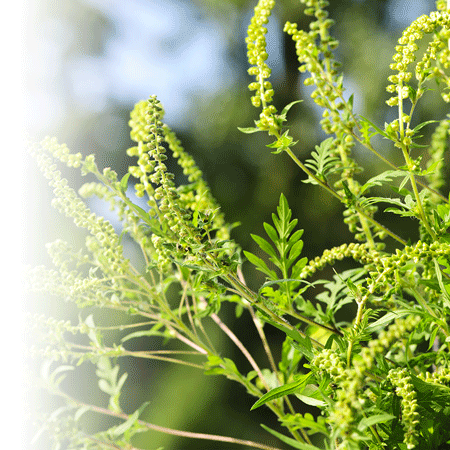
Ragweed makes life unpleasant for many people with allergies during the summer. Sneezing, itchy eyes, a runny nose… This very common plant, also known as Ambrosia artemisiifolia can cause a lot of discomfort on a daily basis. Fortunately, it is possible to prevent and relieve these allergy symptoms so you can fully enjoy the summer!
What is the difference between ragweed and poison ivy?
Although their names are very similar and they both cause allergic reactions, ragweed and poison ivy are two very different plants. The former mainly causes respiratory problems, while the latter primarily affects the skin.
- Ragweed is airborne: its pollen, carried by the wind, triggers reactions in susceptible individuals. This weed poses no danger when touched and can be handled without protection. Its deeply lobed leaves resemble those of a carrot.
- Poison ivy acts through direct contact: its sap contains urushiol, a substance that causes a painful skin reaction as soon as it comes into contact with the skin. Direct contact with this plant should therefore be avoided, and gloves should always be worn when handling it. It can be recognized by its smooth, glossy leaves, which grow in clusters of three leaflets and range in colour from wine red in the spring to dark green in the summer.
What are the reactions to ragweed (Ambrosia artemisiifolia)?
Ragweed pollen causes seasonal allergies, also known as allergic rhinitis or hay fever, in thousands of people during the summer.
Allergic reactions to ragweed can manifest as various bothersome symptoms that can affect daily life:
- Nasal congestion;
- Nasal discharge;
- Sneezing;
- Tingling of the eyes, nose, throat, palate or ears;
- Watery eyes;
- Coughing.
Did you know?
In some cases, ragweed allergy symptoms can lead to other related problems such as insomnia, irritability, difficulty concentrating, worsening of asthma, or an infection like sinusitis.
When does ragweed appear in Quebec?
Ragweed season runs from May through October, but it starts to produce pollen and trigger allergic reactions in mid-July.
The pollen season lasts until the first frosts of autumn, usually around mid-October, but pollen levels in the air peak in August, making this the most difficult time of year for allergy sufferers.
Did you know?
During the pollination period, ragweed pollen can account for up to 75% of all pollen in the air.
Where is ragweed mainly found?
Ragweed grows mainly in poor soil and disturbed areas, particularly along roadsides and sidewalks, on vacant lots, construction sites, industrial sites, and snow storage areas. The plant particularly thrives in areas with sparse vegetation, which gives it plenty of room to spread!
Since ragweed is often found along roadsides and in vacant lots, caution is advised during summer outings, whether outdoors or by car.
How can you recognize ragweed?
The appearance of ragweed varies depending on its stage of growth, but there are a few characteristics that make it fairly easy to identify.
- Size: It can range from a few centimetres to nearly two metres in height, depending on environmental conditions.
- Stem: Firm and covered with fine hairs, it has a characteristic greyish-green colour.
- Foliage: The leaves are finely dissected and downy, closely resembling those of the wild carrot. This is the most distinctive feature of ragweed.
- Flowers: Starting in mid-July, small spikes of greenish male flowers appear at the top of the plant. It is these flowers that release the allergenic pollen into the air.
What should you do if you find ragweed, and how can you get rid of it?
The best way to minimize allergy symptoms is to reduce the amount of ragweed in your immediate surroundings.
- On residential property: pulling them out by hand is still the most effective method. Simply uproot the plant by hand or using a hoe, ideally before mid-July, which is when pollination begins.
- For large areas: two mowings per season—one in mid-July and one in mid-August—are recommended to significantly reduce the amount of pollen released.
Once pulled out, ragweed can be disposed of with household trash. However, do not throw it in the compost, as its seeds could contaminate the soil.
Good solutions for preventing regrowth include using mulch or planting other vegetation in the area, since ragweed has a hard time taking root in well-covered soil.
Did you know?
Unlike poison ivy, ragweed is harmless if you touch it and can be pulled up with your bare hands. In fact, it is recommended to pull it up when you notice it. However, make sure it is indeed this unwanted plant before you touch it!
How do I prevent or reduce allergy symptoms during ragweed season?
There is no cure for permanently eliminating seasonal allergies caused by ragweed, but there are several ways to significantly reduce their effects on a daily basis:
- Remove ragweed before summer is in full swing;
- Wear sunglasses to reduce the amount of pollen that reaches your eyes;
- Avoid drying clothes and bedding outdoors, as pollen can cling to fabrics;
- Remove your clothes if you think they might be covered in pollen when you enter your home;
- Take a shower and change your clothes when you get home, as pollen can remain on clothing, skin, and hair;
- Keep your windows closed (in the car, at home, at work, etc.) and use a fan or air conditioner instead;
- Avoid going outside in the morning or when the weather is dry, hot, and windy; instead, spend time outdoors when pollen counts are low, such as in the late afternoon or after a heavy rain;
- Wear a dust mask when gardening or mowing the lawn;
- Check the pollen count forecast and avoid going outside when pollen counts are very high.
What are the best treatments for ragweed allergy symptoms?
The immune systems of people who are sensitive to ragweed perceive the plant's pollen as a “threat” to the body, which triggers allergic reactions. Since there are other possible causes for these symptoms, an allergen test is first required to ensure that ragweed is indeed the cause of your allergies.
Once a diagnosis has been made, there are several options available to provide relief and help get the most out of summer.
Antihistamines
Antihistamines, also known as allergy medications, are the most commonly used drugs for relieving the symptoms of seasonal allergies. Many are available over the counter in pharmacies, in the form of tablets, syrups, or eye drops. Those taken orally can sometimes be combined with other medications, such as a nasal decongestant.
As with any over-the-counter medication, check with your pharmacist first before purchasing an antihistamine.
Saline solution
Rinsing the nasal passages with a saline solution can provide significant relief by clearing the nose of accumulated pollen. This rinsing also helps reduce congestion and irritation of the nasal mucous membranes caused by prolonged exposure to pollen. It can be done several times a day and is completely safe for everyone in the family.
Cortisone-based nasal sprays
If antihistamines and saline solution do not provide sufficient relief from your symptoms, your pharmacist or doctor may prescribe a cortisone-based nasal spray. This type of treatment acts directly on the inflammation of the nasal mucous membranes, which helps reduce congestion, runny nose and sneezing in a more targeted and lasting way.
Pollen desensitization (immunotherapy)
Pollen desensitization treatment may be considered for people whose symptoms do not respond to the usual treatments. This approach involves administering allergen extracts on a repeated basis to gradually desensitize the immune system to ragweed pollen. To date, it is the only treatment that positively alters the natural course of seasonal allergies.
Your health in the summer: We've got you covered!
Don't let ragweed season ruin your summer. Ask your pharmacist for personalized advice and to learn about the best treatment options, so you can enjoy a healthy summer.