Makeup, pollution, wind, sun... Your skin is subjected to daily stress and needs active support to recover. Night cream is the beauty ally we all too often underestimate, even though it plays an essential role in skin health and radiance.
Whether you are 25 or 65, have dry or oily skin, there is a formula made for you. Here is everything you need to know to choose the right product, apply it properly and get the most out of it.
What does the skin do while you sleep?
Your skin does not behave the same way during the day as it does at night. It follows a circadian rhythm. In other words, a 24-hour biological cycle that regulates its functions according to the time of day.
During the day, it goes into defence mode: protecting itself from UV rays, pollution, weather variations and the proliferation of bacteria. This is exhausting work for the skin cells!
At night, on the other hand, the skin shifts into repair and regeneration mode. While you sleep, your cells divide more actively, collagen production accelerates, and the skin barrier is restored. This is also the time when the skin is most permeable and therefore most receptive to active cosmetic ingredients.
Did you know? Sleep plays a key role in skin health, supporting cell regeneration and collagen production. A bad night's sleep can potentially affect the quality and radiance of the complexion the following morning.
Why use a day cream and a night cream?
You might think one cream would be enough for every occasion. That would be a mistake. Day cream and night cream meet very different needs, and above all, they work together.
Day cream is designed to protect. Lightweight and often featuring a sun protection factor (SPF), it forms a shield against external aggressions, maintains hydration, and prepares the skin for makeup.
Night cream, for its part, is formulated to repair and deeply nourish the skin. Its texture is generally richer, as the skin does not need lightness during sleep; it needs concentrated repairing active ingredients. It contains no sun filters, and its ingredients are chosen to amplify natural cell regeneration processes.
Is it necessary to apply a night cream?
Is night cream an unnecessary product? For the vast majority of adult skins, night cream brings concrete, measurable benefits.
During sleep, the skin loses more water through evaporation. A night cream acts as a gentle barrier that limits this loss while delivering nourishing active ingredients. The result: more supple, radiant skin that is better prepared to face the day ahead.
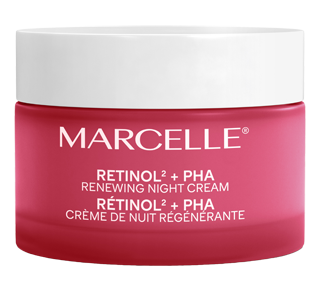
Marcelle
Retinol2 + PHA Renewing Night Cream, 50 ml
Renewing night care for plumper, smoother skin.
Good to know: Before the age of 20, young people's skin often has no particular problems and therefore does not need night cream.. But as soon as the skin shows signs of dryness, fine lines, imperfections, or specific needs, night cream becomes a valuable tool for its health.
Are night creams really effective?
Yes, night creams are effective as long as you follow two important points: choose the right ingredients and be patient. The effectiveness of a night cream depends essentially on its active ingredients and compounds, which act biologically on the skin. Here are the most scientifically recognized:
- Retinol (vitamin A): It is the definitive anti-aging ingredient. It stimulates collagen production, accelerates cell renewal and visibly reduces fine lines and wrinkles after several weeks of regular use.
- Hyaluronic acid: This active ingredient, naturally present in our bodies, acts like a sponge. It draws moisture into the deep layers of the epidermis and visibly plumps the skin, reducing the appearance of dehydration lines.
- Peptides: These amino acid chains send signals to skin cells to stimulate the production of collagen and elastin, the two proteins responsible for skin firmness.
- Vitamin C: A powerful antioxidant, it repairs damage caused by free radicals (pollution, UV), evens skin tone and promotes collagen synthesis.
- Bakuchiol: A plant-based alternative to retinol, of natural origin, it offers comparable effects with better tolerance for sensitive skin.
Did you know? A study on the skin's circadian rhythm confirms that the skin barrier repairs itself more effectively at night, and that active ingredients applied in the evening penetrate deeper than during the day thanks to the increased permeability of the epidermis.
Which night cream to use according to your age?
Unless your skin is very dry, there is no need to use night cream before the age of 20. That said, as soon as a problem arises, you need to take immediate action based on the nature of the problem. Your choice of night cream depends on your age and skin type. For example:
- If your skin is prone to acne, choose a purifying skincare product.
- If your skin is dry, choose rich, creamy textures.
- If your skin is oily, choose lighter formulas, such as fluids or gels.
- In your twenties, go for a moisturizing night cream that will help your skin repair damage caused by sun exposure and lack of sleep.
- In your thirties, it is best to choose an anti-wrinkle night cream to slow down skin aging, refine skin texture, and restore radiance to the complexion.
If you have mature skin, you will need to use an anti-aging cream that boosts hydration, stimulates cell renewal and collagen production, etc.
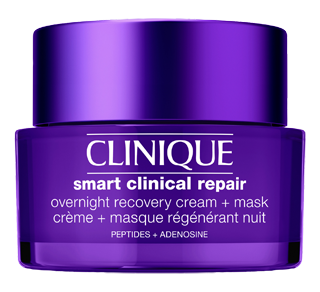
Clinique
Smart Clinical Repair Overnight Recovery Face Cream + Mask, 50 ml
Our anti-aging overnight cream and mask for face and neck visibly repairs lines and wrinkles, helps restore barrier, and visibly quells sensitivity. Delivers deep hydration while you sleep.
How and when should you apply night cream to your face?
In the evening, before going to bed, apply your night cream to perfectly cleansed and exfoliated skin. Smooth it over the entire face, except for the eyelids and eye contour area, which are more delicate and require a specific product to prevent puffiness.
A little extra? Once or twice a week, replace your cream with a leave-on night mask, applying a slightly thicker layer and leaving it on overnight: this gives your skin time to absorb all the active ingredients and get the most out of the formula. Perfect for optimal regeneration and deep rehydration!
Note: Don't expect miracles from your night cream after just one application! It takes about a month for the epidermis to renew itself. So be patient!
Attention: Unless your skin is very dry, you generally don't need to use a night cream before the age of 20. However, as soon as a need arises (dryness, imperfections, first signs of skin fatigue), it is advisable to take action. At that point, talk to your cosmetics specialist at Jean Coutu about a night cream that's right for your skin.
Which ingredients do you need?
|
The skin's needs |
Products to use |
|
To moisturize and plump |
Hyaluronic acid, collagen peptides, argan oil, aloe vera |
|
To fight wrinkles and firm skin |
Retinol or bakuchiol (for sensitive skin), vitamin C, peptides |
|
To even out skin tone and reduce dark spots |
Niacinamide (vitamin B3), vitamin C, glycolic acid |
|
To stimulate regeneration and fight oxidation |
Vitamins A and E, polyphenols, coenzyme Q10 |
What night cream should you choose after 60?
After the age of 60, the natural production of collagen and estrogen diminishes, leading to loss of density, sagging skin, increased dryness and accentuated wrinkles. Our needs change, and so must our night cream.
At this age, it is recommended to use ultra-nourishing and redensifying formulas rich in ultra-fragmented hyaluronic acid, bioactive peptides to stimulate collagen and elastin synthesis, retinol, and rich plant oils (argan, rosehip, jojoba).
Check out our article for essential products for your skincare routine after 50.
How to apply night cream correctly?
The effectiveness of a night cream depends as much on its formula as on the way it is applied. Here is the ideal evening routine:
Step 1 - Makeup removal and cleansing
Apply night cream only to perfectly clean, make-up-free skin. This stage allows the active ingredients to penetrate and act more effectively.
Step 2 - Serum (optional but recommended)
If you use a targeted serum (anti-aging, moisturizing, radiance), apply it before the cream. Its lighter texture penetrates more deeply.
Step 3 - Eye contour care
The periorbital area (around the eyes) is thinner and more fragile, and requires dedicated care. Don't apply your night cream to your eyelids, as this can cause swelling when you wake up in the morning.
Step 4 — Apply night cream
Apply a dab of cream to face, neck and décolleté. Apply using gentle upward circular motions, without pulling on the skin.
There will be no miracles on the first night! The epidermis takes around 28 days to completely renew itself. So you need to use your night cream regularly for at least 4 weeks before you can fully appreciate its effects.
Night cream works in tandem with your skin's natural mechanisms to repair, nourish, plump, and slow down skin aging while you sleep. So yes, choosing the right skincare products is not always easy, but our cosmetics specialists at Jean Coutu are here to guide and advise you based on your skin's needs.